Tuesday, February 1, 2011

In Honor of Meat

Sometimes you just need a little red meat.

In the 60’s, when the craving hit my family we’d head to Lawry’s The Prime Rib on La Cienega Blvd. in Beverly Hills. My grandparents lived in Los Angeles and often when we’d visit from San Diego, they would treat our family to dinner at Lawry’s.

It was always a special occasion. The restaurant was expensive, even in those days, and for our family it felt like a big night out. My mom would doll up my sister and me in our best dresses, put my hair in a bun, which I hated, and remind us to be on our best behavior.

My grandparents were loving and wonderful people. As proper grandparents should, they showered their grandkids with presents. They took us on tons of outings --often to Kiddyland (also on La Cienega) and the La Brea Tar Pits. My grandmother baked cookies and made taffy. And they lived in a large house complete with a bar and a slot machine where my sister and I could pretend to be cowboys in an old time saloon.

In exchange for their largess they expected good behavior from us when out in public.

My most vivid memory of one of these meals at Lawry’s was of an elderly couple coming up to our table as we finished our meals. The husband leaned over conspiratorially to my dad and said, “Those are the most well behaved children we have ever seen in a restaurant. You have a lovely family.” My parents and my grandparents beamed with pride.

What the elderly couple didn’t know was that there was a secret behind our etiquette.

Much of the allure of Lawry’s, besides the beauty of a big red slab of prime rib on your plate, were the giant wheeled silver carts the chefs rolled over to your table that contained the standing rib roasts. The rolling doors on the carts would be dramatically opened to reveal the rib roasts and the chefs would carve them up tableside. It was quite an impressive sight befitting the over-the-top splendor of the restaurant.

And every time we went to Lawry’s, as we settled into our booth, my parents would point to one of the carts and remind my sister and I that that was were where they put the naughty children who didn’t behave at dinner. As absurd as that sounds, I believed it one hundred percent. And my parents, enjoying their martinis, never bothered to let me in on the joke.

Speaking of big metal contraptions that encase meaty delights, my new smoker from Weber arrived on Friday. The thing is enormous. It could fit two naughty children inside. It also has me thinking that I need to make some new meat eating friends as it seems fewer and fewer of my current pals are carnivorous.


I christened The Beast on Sunday and smoked up some baby back ribs. Kathy emailed me the next morning and claimed they were the best she’d ever had.


This spice rub is terrific on pork—baby back ribs in particular. Sprinkle both sides of the rib racks with the rub, then grill them over indirect heat on a charcoal grill for about 40 minutes. (These puppies took 4 ½ hours on my new smoker and they were worth every minute!)


Dry Rub


Adapted from Saveur Magazine

MAKES 3 CUPS
1 cup sugar
1⁄4 cup seasoned salt, such as Lawry's
1⁄4 cup garlic salt
1⁄4 cup celery salt
1⁄4 cup onion salt
1⁄2 cup paprika
3 tbsp. chili powder
2 tbsp. freshly ground black pepper
1 tbsp. lemon pepper
2 tsp. ground sage
1 tsp. dry mustard
1⁄2 tsp. ground thyme
1⁄2 tsp. cayenne
1. Sift together sugar, seasoned salt, garlic salt, celery salt, onion salt, paprika, chili powder, black pepper, lemon pepper, sage, mustard, thyme, and cayenne into a bowl. Store in a jar. (When using, sprinkle onto, don't rub into, meat.)

Sunday, January 16, 2011

A Fungus Among Us

If you met my dad today you'd never imagine him as a hunter-gatherer. Well maybe a gatherer. But the hunter part you'd have a hard time believing.

One of my most vivid childhood memories is of the day a large box arrived and was placed in the middle of our living room. Our dad opened the box and out came a bear skin rug. The rug had been a bear that my father had hunted in Michigan and it was the scariest thing I'd ever seen. With big, shiny white teeth and snarling expression frozen on its face, I was sure it was going to get us all! My dad thought it was hilarious to roar every time my brother or I came anywhere close to the beast. Then he chased us around the house, up and down the stairs, through the kitchen and back into the living room until my mom finally put a stop to the shenanigans. As a small child when my friends feared the Boogie Man at night I'd image that the bear, hanging on the wall, had come back to life and was just outside my bedroom door waiting to eat me!

Fortunately the rug is no longer part of the family. After a long stint in my dad's closet it was given to the son of one of my dad's good friends and put where it belongs, hanging on a wall in a cabin in the woods.


The memory of my dad, the gatherer, is much less scary, for the most part. I recall walking through the forest with him, picking mushrooms and taking them back to the car to be properly identified. I don't remember us ever eating anything he picked but rather dissecting them, looking from mushroom to book and back trying to get a positive ID.


20 years ago he gave me a copy of David Aurora's Mushrooms Demystified. Mike and I started hiking the hills in search of chanterelles. Easily identified, delicious, safe to eat and this year they are being harvested by local gatherers in abundance. If you are familiar with the book you'll remember the photo of David Aurora coming out of a field with a big box of shrooms and a face painted green. That's how I started to feel after consuming a box of freshly harvested chanterelles. Freezing some before you get to that point is a great idea.


I lightly dry saute mine, then put them into small ziploc bags once they've cooled and pop them into the freezer for use during the leaner shrooming times of the year.After making chanterelle enchiladas, and about 10 different types of pasta with chanterelles and whatever else I happen to have on hand, I've landed on my favorite use for the golden fungi - Wild Mushroom Risotto. Part of the reason I'm partial to this recipe is that it allows me to use up some of the home dried porcini mushrooms a fellow forager recently sent out way.


Wild Mushroom Risotto


1 to 1 1/2 cups chopped wild mushrooms (reconstituted if using dry)
4 tablespoons unsalted butter
1 small onion, diced
1 1/2 cups arborio rice
1/2 cup dry white wine
3 +/- cups liquid - I use a mixture of chicken stock and the reconstituting water.
1 tablespoon fresh thyme or 1/2 tablespoon fresh rosemary
1 tablespoon fresh parsley
3/4 cup freshly grated parmesan


Melt 2 tablespoons of butter in a medium sized pot. Add diced onion and cook until translucent. Add chopped mushrooms and saute until soft. Add rice, when slightly translucent around the edges add the wine. Start adding liquid a ladle full at a time all the while stirring the risotto. As the liquid is absorbed add more until the risotto is al dente. Add herbs, butter and cheese and let rest for 5 minutes. Serve with a green salad and a glass of the rest of that bottle of wine you opened for the risotto.

Saturday, January 1, 2011

Life's Simple Pleasures

After both growing up with the same turkey with sage stuffing, sweet potatoes with marshmallow topping and green bean casserole every year, my sister-in-law Nancy and I made a pact that our Thanksgiving tradition would be to never make the same recipe twice. As a result, come mid-October, we compulsively check our mailboxes until finally the November issue of Bon Appetit arrives. Together we pour over the lists of menus and recipes. Our husbands are consulted and we pull together what we hope will be a fabulous menu. Shopping lists are made, shopping dates arranged and long loving hours are spent concocting a beautiful meal that takes on average 20 minutes to consume. I love the entire process and wouldn't dream of giving it up in a million years. However, by the Saturday after Thanksgiving I'm done with turkey for the year and I'm also ready to enjoy some time outside the kitchen.

This is when I turn to the simple things in life.

A few weeks earlier we'd been to a local restaurant and had a simple and delicious salad of bresaola with arugula. I was on the hunt to recreate it. Hmmm, where am I going to find bresaola in SLO County? One of the great benefits of living on the Central Coast is the availability of fresh ingredients. The downside is the scarcity of exotic or international ingredients. Things like empanada skins and guanciale are non-existent in the county.
An email to Devon netted me a sarcastic "Bresaola in SLO? Yeah, right!". This resigned me to postpone my re-creation until I could make it up to San Francisco. I added it to my shopping list along with the empananda skins and guanciale. Then the call came - Devon had happened upon a local restaurant that sells bresaola! In a foiled attempt to purchase the bresaola from Devon's source I actually found a second source in SLO!

Bresaola in hand I set about recreating this delicious, simple salad. Now, if I can just locate a local source for the empananda skins and guanicale...

Bresaola Salad
Fortunately thinly sliced bresaola goes a long way as you can expect to pay upwards of $20 a pound for it. A quarter of a pound should be plenty for about 6 salads.

1/4 lb bresaola (Muzio's or Luna Red in SLO)
baby arugula
good quality olive oil
Parmesan cheese
lemon wedges


Place 4 or 5 slices of bresaola directly onto a salad plate and add a big handful of arugula on top of the meat. Drizzle with good quality olive oil and shave some parmesan on to the arugula. Serve with a lemon wedge to be squeezed over the top just prior to eating.


Personally I think the pepper of the arugula and saltiness of the meat and cheese is seasoning enough, but you may want to add a bit of one or both to suit your taste.


Sit down, relax and enjoy!


Sunday, December 12, 2010

Of Criminals and Crabs

My dad forced my brother and me into a life of crime when we were very young.

I remember him sitting in the driver’s seat of the Buick Station Wagon as its big V8 engine idled, a cigarette dangling from his fingertips. As my brother and I crept forward in the darkness and looked back at him for reassurance we could see only the Salem’s embers glowing as he inhaled.

“Hurry up!” he’d hiss. And onward we’d scurry, hearts pounding, palms sweaty.

We’d hurl the heavy garbage bags of bloody entrails into the neighborhood park’s dumpsters, turn on our heels and run back to the safety of his car. It seemed like miles of ground to cross between the dumpster and the Buick. I was scared to death and sure that the cold firm hand of a policeman would clutch the back of my collar before I could throw myself into the back seat and lock the car door.

The dirty deed done and The Law averted, my Dad would peel out and race for home, quickly finishing the rest of his secret smoke before rejoining polite society.

“How’d it go?” my sweet mother would ask as she greeted us at the door. I couldn’t help but feel deep shame that all of us, even my gentle mom, were a part of this dark family secret. We’d been doing it for years and I knew it was wrong. But there was no stopping my dad, who insisted his kids come along for the ride each time, miniature henchmen to do his bidding.

My dad loved to fish for albacore and my mother liked clean trash cans.

Forty years ago the annual albacore runs offshore in San Diego were bountiful and my dad and his buddies would come home from overnight charter trips with dozens of big tuna. They’d divide up the catch and we kids would watch my dad skillfully clean his share as the coals in his Weber turned grey.

Dinner over, an impassioned conversation would invariably ensue between my mother and my father about how many days it would be until Trash Day. And invariably, if it was further into the future than the next morning, my mother would demand a midnight run to the park so that her trash cans wouldn’t be sullied by fishy odor.

Once their little juvenile delinquents had stealthily deposited the smelly fish guts into the Kate Sessions Park dumpsters, domestic bliss would be restored in our home.

I recalled these furtive outings as I stood over my kitchen sink the other night cleaning Dungeness Crabs. As I dropped the gills and shells and goopy viscera into a plastic garbage bag, I couldn’t help but silently calculate how many days until Trash Day. I didn’t make a nocturnal run to the nearest public dumpster but I did avoid lifting the lid of our outdoor bin for the remainder of the week.


It’s crab season right now and our local fishmonger was advertising strong supply and low prices--$4.95 per pound for live ones. So, Kathy and I cooked up a batch last weekend and served them with our favorite dipping sauce, a rich, spicy-sweet chile butter.


There’s no excuse for buying the crabs already cooked. It’s the easiest thing in the world to boil up a batch. I cleaned all eight in under 10 minutes, ripping off the legs and claws while Kathy, at the other end of our two person assembly line, partially cracked each piece and tossed the parts into a big serving bowl.

The crab was still warm when we served, accompanied by Caesar Salad and a couple of homemade baguettes.

Dungeness Crabs with Chile Butter


We usually buy one crab (1.5 to 2 pounds each) per person. Keep them on ice in an ice chest until you are ready to cook. Don’t keep them in a plastic bag—they don’t breathe much when they are on ice but they do need some air! The chile butter is divine. You’ll never go back to simple melted butter.

Bring a large pot (or pots depending on how many crabs you are cooking) of well salted water to a rolling boil.


Banish any squeamish dinner guests from the kitchen and drop the live crabs into the boiling water. Cover pot with lid and boil for 20 minutes. Crabs will turn deep orange when they are done.


After 20 minutes, dump the crabs into the sink and clean them as soon as they are cool enough to handle. There are ample directions on how to clean crabs on the internet. Here’s a quick recap from the Oregon Dungeness Crab Commission.

http://www.oregondungeness.org/cleaning.shtml

To serve, break off the legs and claws, give them each a quick crack with a crab cracker or nutcracker and toss them in a big serving bowl. Break each crab body in half and add to the bowl. Serve family style with a crab cracker and pick for each person.


Chile Butter

Each pair of dinner guests can share a ramekin of chile butter. This recipe makes plenty for about 8 crabs.

Melt three sticks of unsalted butter over low heat in a small saucepan. Spoon off the solids that rise to the top and discard.

Add:

2 Tbsp. ancho chile powder
4 tsp. brown sugar
2 tsp. kosher salt
1 ½ tsp. ground cumin
1 tsp. dried oregano
½ tsp. cayenne

The chile butter can be made a couple hours ahead and reheated gently. Right before serving, divide the melted butter into 4 -5 little ramekins, ensuring that the ground spices are evenly divided among them.

Dip each succulent bite of crab into the butter, stirring up some of the spice. Eat. Enjoy. Bibs optional.

Sunday, December 5, 2010

Pan Envy

Every cook has a go-to dish: something that can be thrown together relatively quickly, looks pretty, tastes delicious and is a guaranteed crowd pleaser.

Kathy’s and my shared culinary history is littered with them. They are the fail safe recipes we turn to time and time again until our husbands beg us to stop. There was the Chicken with White Wine, Proscuitto and Rosemary ladled over polenta that we made every ski trip. There was the Bobby Flay Grilled Tomato Bread Salad that wowed our summer dinner guests and repulsed our husbands. Chipotle Macaroni and Cheese has been the star at many a dinner buffet over the years. And as detailed in a previous blog post, one of us seemed to serve CafĂ© Pasqual’s Carne Asada at a dinner party almost weekly there for awhile. The recipes are so entwined in joint gatherings that we lose sight of who discovered it originally.

Then Kathy got a paella pan for Valentine’s Day. Later, a photo of her proud, smiling face posed over a steaming pan of the Valencian dish appeared on her Facebook page. Not only did she have a paella pan, I hadn’t been invited to its inauguration. A big guilt trip prompted an invite a few weeks later and a mild case of desire blossomed into full blown pan envy.


Paella meets all the requirements for the go-to meal. It’s visually stunning, impressive in presentation. Most of the prep work can be done ahead and the dish simmers stovetop while the cook relaxes with friends. The only challenge can be finding bomba rice and good Spanish chorizo locally.


I’m hoping Santa remembers to add those two ingredients to his shopping cart while he’s ordering my pan.


Mixed Paella (Paella Mixta)

Source: Saveur Magazine


30 threads saffron, crushed (a scant 1⁄2 tsp.)
1 lb. boneless skinless chicken thighs,
cut into 2" pieces
10 large shrimp, peeled and deveined
Kosher salt and freshly ground black pepper,
to taste
1⁄2 cup extra-virgin olive oil
4 oz. dry-cured Spanish chorizo,
cut into 1⁄4"-thick coins
1 tbsp. smoked paprika
3 cloves garlic, minced
3 dried bay leaves
3 medium tomatoes, minced
1 small onion, minced
7 cups chicken broth
2 1⁄2 cups short-grain rice,
preferably Valencia or bomba
1 9-oz. box frozen artichoke hearts, thawed
8 oz. fresh or frozen peas
3 jarred roasted red peppers,
torn into 1⁄2"-thick strips
12 mussels, cleaned and debearded


1. Put saffron and 1⁄4 cup hot water in a small bowl; let sit for 15 minutes. Season chicken and shrimp with salt and pepper. Heat oil in a 16"–18" paella pan over medium-high heat. Add chicken, shrimp, and chorizo and cook, turning occasionally, until browned, about 5 minutes. Transfer shrimp to a plate, leaving meats in pan. Add paprika, garlic, bay leaves, tomatoes, and onions to pan and cook, stirring often, until onions soften, about 6 minutes. Add reserved saffron mixture and broth, season with salt, and bring to a boil over high heat.


2. Sprinkle in rice, distribute evenly with a spoon, and add artichokes, peas, and peppers. Cook, without stirring, until rice has absorbed most of the liquid, 10–12 minutes. (If your pan is larger than the burner, rotate it every two minutes so different parts are over the heat and the rice cooks evenly.) Reduce heat to low, add reserved shrimp, and nestle in mussels hinge side down; cook, without stirring, until mussels have opened and rice has absorbed the liquid and is al dente, 5–10 minutes more. Remove pan from heat, cover with aluminum foil, and let sit for 5 minutes before serving.

SERVES 6 – 8

Sunday, November 14, 2010

The Dangers of Being a Locavore

Since long before the term locavore became trendy and so self-important sounding, Central Coast residents have been enthusiastically embracing local farmers markets. On any given day, there are usually at least two happening and over the course of the week, sixteen different venues give shoppers the opportunity to stock their fridges with locally sourced produce, seafood and meat. In my social circle it’s rare to meet someone who doesn’t shop religiously at “Farmers” as we call it-- not because it’s fashionable but because we simply can’t imagine doing it any other way.

San Luis Obispo County is a rich agricultural region. We’re friends with farmers and ranchers. Our Morro Bay fishmonger announces weekly in an email blast which boat and which captain, exactly, offered up this week’s Sea Bass. The wine we drink is made by friends and neighbors. FFA is big here so someone’s kid is always raising a hog or sheep for the Mid State Fair, then desperately seeking a buyer for the fair’s last day auction. My pantry holds locally made honey, olive oil, chipotles and wheat bread. It’s easy to live within our culinary means here.

But I did perhaps take the locavore concept a bit too far last spring when I bought a baby goat.

During one of my weekly Saturday morning chats with the artisan cheese-and-pasture chicken guy at Farmers Market he revealed that he also sold Spring lambs and goats to a lucky few each year. I immediately reserved a goat, thinking I’d convince a few fellow carnivores to try goat tacos during the summer.

I never actually met the goat but I felt like I got to know him. Each week I asked Mr. Cheese and Chicken Guy if my goat was ready. “No, he’s not ready yet,” he’d reply. And then he’d add a just enough of a reason that I began to wonder if this was such a great idea. “He’s only about this big,” he’d say while holding his hands apart by about the length of a Yorkshire Terrier. “He’s still sleeping in a big ole pile with his brothers and sisters.”

Finally one Saturday in September, Mr. Cheese and Chicken Guy flagged me down at Farmers Market and said my baby goat had an impending date with the butcher. I made arrangements to pick him up ---frozen and in a box-- a few weeks later at the man’s Santa Margarita ranch and started researching recipes for Mexican Birria.

On the big day, Kathy and I drove out to the ranch. Beautiful, billowy thunderheads gathered over the oak studded hills, the windy, narrow road twisting through golden pastures. We were met at the door by the rancher’s wife, the cheesemaker herself, who immediately offered to give us a tour so we could see where my goat came from.

We saw the sheep she sheared for wool, the milk goats and the heirloom pig that would soon fill her own freezer. Then we entered a large fenced pasture where a dozen young goats scampered around. One goat, larger than the rest, took a quick interest in Kathy and me, nibbling at our jackets, butting our thighs, rearing up on us and generally becoming a goaty nuisance. I said, “He’s the one that should have gone to the butcher!” and was told that he was my goats brother. Suddenly I didn’t feel so much like the grim reaper.

In the middle of the grassy pasture we were standing in was a small portable corral, about 15’ by 15’ and fenced with wire meshing about 3 feet tall. Inside the corral were 30 white chickens who cackled and pecked and fluttered about. These were the lovely chickens I’d been buying at farmers market for the last year that actually tasted like chicken. They had firm flavorful meat in stark contrast to a colorless and mushy grocery store bird.

One had escaped the pen and was running clockwise around the outside, squawking in panic and missing his friends. The rancher’s wife started to run after him to no avail. She pointed at Kathy and ordered her to start walking counterclockwise around the pen so the chicken could be caught between them.

As they closed in on the escapee, it dashed straight toward Kathy. “Catch it!” the rancher’s wife shrieked. Kathy, ever the good sport, lurched forward, reached out with two hands and grabbed the bird just as it threw itself into the wire fencing. A second loud shriek, this time from Kathy, pierced the country air and she threw up her hands and leaped back. The fence, it turned out, was electrified. Kathy looked at me, her eyes wide, and gasped. The charge had gone straight through the chicken and bolted her right out of her bucolic reverie.

While I’d like to be able to say that I, ever the empathetic friend, tended to her obvious distress I cannot. Instead I must admit I was convulsed with laughter to the point I can’t even remember driving home. It’s still a bit of a sore subject.

This recipe for Goat Birria adapted from one by Rick Bayless is pretty authentic according to my research. The chile sauce is time consuming but worth it. It’s a brilliant, rich red and tastes of pure chile. It would be great on lamb or pork if you don’t find yourself with a freezer full of young goat like I did. Even if you don’t try this recipe, commit the technique for the garlic to memory as the cloves roasted in this manner would improve many recipes calling for garlic.

As is our habit we forgot to take a photo of the finished dish. I blame the wine.


Birria de Chivo o de Carnero
Slow steamed Goat or Lamb with mild chile seasoning.


We served this meat up taco style in warmed corn tortillas with sliced radish, lettuce and crumbled cotija cheese.


Ingredients
o 1 (5 lb) pieces young goat meat, perferably a hind quarter or one 3 pound
bone in lamb roast from the shoulder or butt-end of the leg
o 12 large chiles guajillos, stemmed,seeded and deveined
o 6 cloves garlic
o 3 teaspoons cider vinegar
o 1/4 tablespoon ground cumin
o 3/4 teaspoon ground black pepper
o 1 teaspoon salt
o 2 teaspoons sugar
o 1 large ripe tomatoes, roasted,peeled and cored or a 15 oz can of tomatoes,
drained
o 1 teaspoon oregano ( mexican if you can find it)
o 1/2 teaspoon salt
o 1 small onions
o 3 teaspoons fresh coriander
o 2 small limes


Directions
1. The Meat: Trim most of the fat from the meat.
2. If it is a goat hindquarter cut into 2 pieces, severing it through the joint
at the top of the leg.
3. Place in a large, noncorrosive dish.
4. The Chile Marinade: Heat a griddle or heavy skillet over medium heat.
5. Tear the chiles into flat pieces and toast them a few at a time, pressing
them against the hot surface until they crackle and blister, then flip them
over and repeat. Be careful not to burn or they will turn bitter.


6. Cover with boiling water, weight with a plate to keep them submerged and
soak 30 minutes.
7. Roast the garlic on the hot griddle until black on the outside, soft in
middle.
8. Cool and peel.
9. Drain the chiles and place in a blender jar with the garlic and vinegar.
10. Add the cumin, pepper and salt and 3/4 cup water.
11. Blend until smooth-then strain.
12. Remove 1/2 cup, stir in the sugar, cover and set aside for the final glazing.
13. spread the rest of the chile paste over the meat, cover and refrigerate for
at least 4 hours or, preferably, overnight.
14. Slow steaming: Preheat the oven to 325.
15. Ser a roasting rack into a deep, wide stockpot with a tight fitting lid.
16. Make sure the rack is 1 inch off the bottom. If it isn’t rest the rack on
custard cups.
17. Measure in 3 cups of water then lay the marinated meat on the rack and
spread any remaining marinade over it.


18. Bake for 3 hours.
19. Finishing the broth: take off the lid; then carefully remove the tender meat.
20. Take out the rack, spoon the fat off the broth and then measure it.
21. You need at least 1 quart-if necessary, add water to bring it to that level.
22. Pour the broth into a small saucepan.
23. Puree the tomato in a blender or food processor, add it to the broth along
with the oregano, cover and simmer over medium low heat for 20 minutes.
24. Season with salt.
25. Glazing and serving the birria: Shortly before serving, remove the bones,
large pieces of gristle and excess fat from the meat, keeping the pieces of
meat as large as possible.
26. Set the meat on a baking sheet, brush lightly withthe reserved chile paste
glaze, then bake for 10 minutes to set the glaze.
27. Either present the meat on a large platter and pass the warm broth
separately, or slice the meat across the grain and serve it in deep
plates, awash in the broth.
28. Mix the onion and cilantro, and pass the lime at the table.

Monday, October 25, 2010

Wabbit Season


“Rabbit??" Mike replied with his brow furrowed after I told him what Devon and I were preparing for Saturday night’s dinner. “Are you opposed?” I asked. He claimed he wasn’t, but I knew exactly what he was thinking. I could almost see the image of Coco (aka Mr. Wiggles) in a thought bubble over his head.

Coco is our octogenarian rabbit.

We acquired him during a live auction at a fundraiser for a local preschool. The bidding started at $5. But for some reason no one placed a bid. Of course by that time in the evening I’d had a few glasses of wine. So, when they asked plaintively if someone would please give the bunny a home my arm shot up. After all, he was so cute! He came with a cute little bunny hutch complete with a crock for food and a bottle for water. Plus, I reasoned to myself, we had a 10 year old at home who would love to have a bunny.

It turned out the bunny needed a new home because he wasn’t very friendly. To make a long story short, for the past 8 years Mike has been the primary care giver for Coco. As far as we know he is at least 10 years old. He is now blind and deaf. The little guy holds a special place in Mike’s heart. A sort of a kinship has formed between the two of them; both male, both senior citizens. I couldn’t blame Mike for his initial reaction given their bond.
.
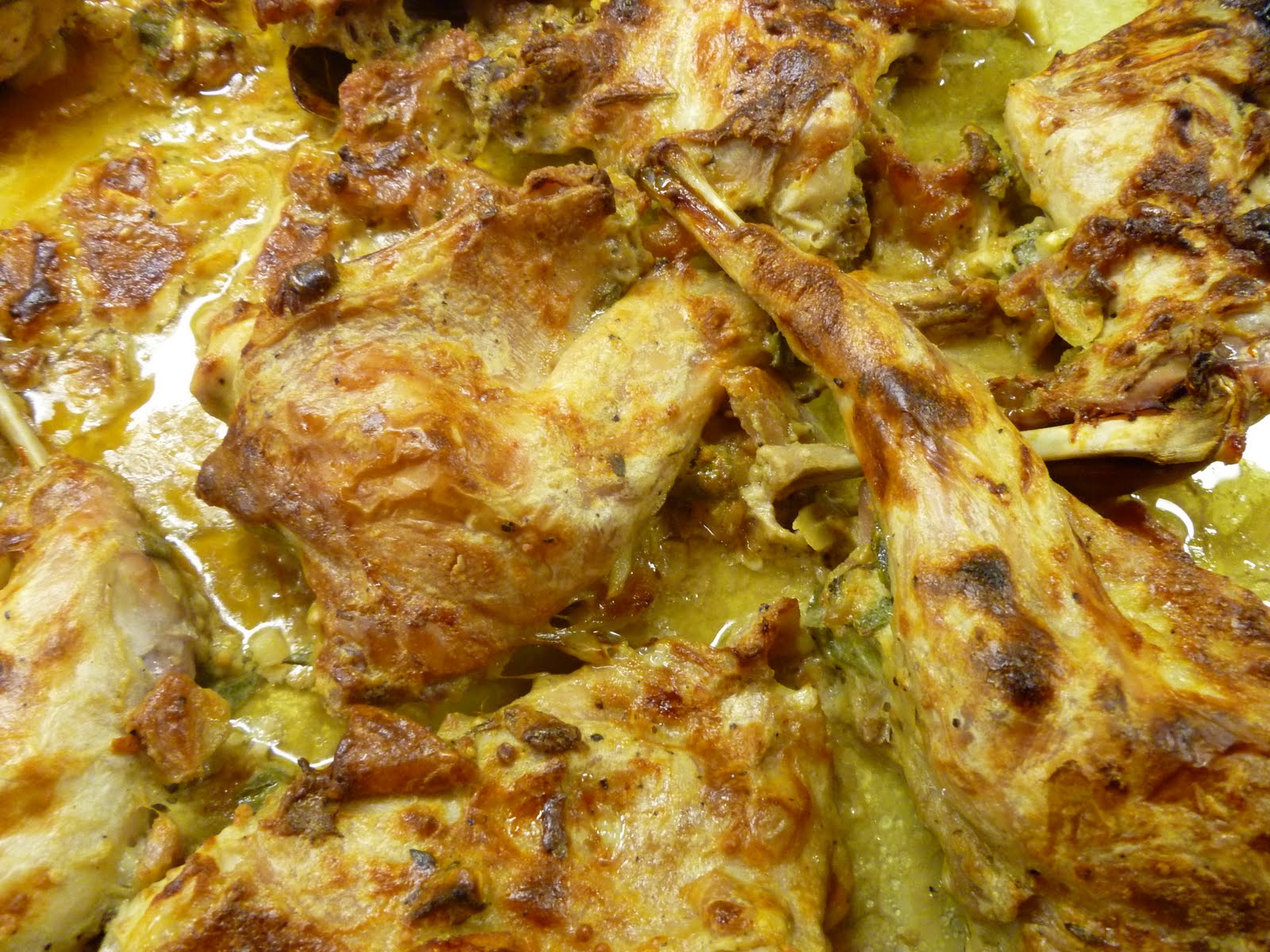
Luckily, when presented with a succulent plate of Chez Panisse chef David Tanis’s Rabbit in Mustard Sauce the furrowed brow had disappeared and an expression of anticipation had replaced it. He even managed seconds

We served our wabbit, as we had taken to calling it teasingly to Mike, with classic potato gratin and a spinach cake.


Here’s the Rabbit in Mustard Sauce Recipe we acquired from Sauver.com, which by the way, is a great magazine with a website that we highly recommend.
http://www.saveur.com/article/Recipes/Rabbit-in-Mustard-Sauce